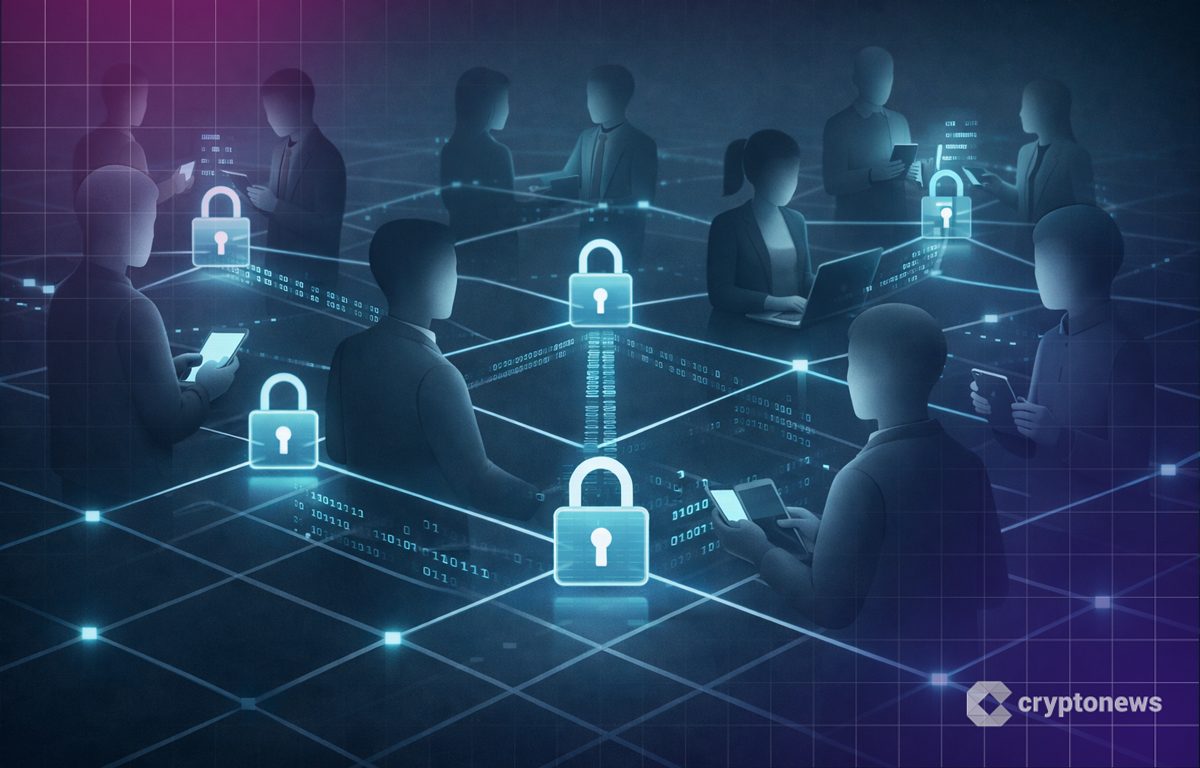
Privacy is a birthright, a soft veil draped over every human before the world ever spoke their names.
In ancient Rome they referred to this right as “privatus”, the part of life withdrawn from the public, protected by nothing more than custom and the instinct that some things simply belonged to you… Your thoughts. Your conversations. Your secrets. Your freedom.
But somewhere between the first email and the first algorithm that learned your habits better than your mother, and suggested diapers to your partner before she knew that she was pregnant, the veil thinned.
Governments responded with frameworks like GDPR, attempting to restrain the growing appetite for businesses to collect personal data. But when something as mundane as a supermarket loyalty card could gather enough information to accurately predict your political leanings, the illusion of limited data collection collapses. What once felt like harmless convenience quietly became a detailed portrait of your private life.
At this point, the veil doesn’t just thin — it’s torn apart. And suddenly, the private realm humans had carried for centuries, the quiet room in the mind where autonomy lived, began leaking light.
Privacy has been vanishing slowly and unnoticed. However, it’s been replaced by a world of data miners and systems that remember everything you’ve forgotten.
A few years ago, Deutsche Telekom launched a campaign under the banner #ShareWithCare. The company used advanced AI to age-progress a photo of a nine-year-old girl, Ella, and then confront her parents in a film played in a cinema about the long-term risks of “sharenting,” the practice of posting children’s images and data online without their consent. Apple also released A Day in the Life of an Average Person’s Data to illustrate the importance of privacy.
The privacy narrative isn’t new. It simply reemerged within the digital assets industry over the last few months.
Privacy Isn’t a Trend. It’s an Ideology
Many are speculating about the reasons behind Zcash’s recent price surge, and the news feed is preoccupied with price movement and predictions of the “privacy meta”.
The public endorsements from mert, ansem, Arthur Hayes, and cobie has undeniably fueled renewed interest, but we have been building in the privacy ecosystem for over ten years.
Regardless of the price outcome of one particular token, privacy isn’t a passing trend. 16z’s 2025 State of Crypto report highlighted a sharp rise in Google search interest for privacy-related terms. Many of today’s crypto enthusiasts, whether from the 2021 bull run or the 2024 memeeuphoria, remain unaware of the big ideological and technical differences that have long shaped the privacy coins ecosystem.
However, privacy coins aren’t built equal.
Privacy Was Always a Feature, Not an Afterthought
The word cryptocurrency literally means “hidden” or “secret” money. However, Satoshi outlined the challenge of wallet tracking in the original Bitcoin white paper. He also argued that crypto would be more powerful with strong privacy.
BTC White paperIt’s important to note that privacy is not about hiding everything. It’s simply the ability to choose what you want to make public and when. Think about how public trading companies operate, they only reveal their financial data in quarterly reports, and it’s critical they don’t disclose this information beforehand. The same principle applies to individuals and organisations in crypto.
Sygnum Bank’s latest report shows 57% of institutional investors now allocate to crypto for diversification, with Layer 1s (L1s) absorbing 69% of the capital allocations led by BTC and ETH and rising on-chain activity.
But as institutional adoption grows, so do concerns around transaction privacy, counterparty confidentiality and operational security, areas transparent L1s weren’t built to address.
What Privacy Projects Learned From Monero and Zcash
The two foundational privacy technologies in crypto have historically been CryptoNote and zk-SNARKs. Early privacy coins almost always relied on one of these approaches. Today, however, mainstream L1s like Ethereum and Solana are beginning to integrate optional privacy layers, pushing confidentiality into the broader ecosystem rather than leaving it to niche chains.
Monero, the flagship CryptoNote asset, uses ring signatures, stealth addresses, and confidential transactions to hide sender, receiver, and amount by default. Architecturally, it resembles Bitcoin, no smart contracts, no tokens, minimal scripting, and a singular focus on private, fungible peer-to-peer cash. It sacrifices programmability to guarantee privacy.
Zcash, the leading zk-SNARK implementation, encrypts transactions using zero-knowledge proofs so the network can verify validity without revealing data. It also mirrors Bitcoin’s model, offering two address types: transparent “t-addresses,” which function like Bitcoin, and shielded “z-addresses,” which provide full privacy. But because privacy is opt-in, most users remain transparent: roughly two-thirds of transactions still expose all details, shrinking the anonymity set and weakening privacy for everyone.
When privacy requires extra steps, fees, or technical knowledge, most people simply don’t use it, and their transparency harms the anonymity of those who do.
Vitalik’s new Kohaku framework, an attempt to offer default-like privacy with selective disclosure, still relies on opt-in shielding.
However, he noted that relying on backdoors or enabling governments to obtain data by issuing a subpoena is unsafe. He argues that data rarely stays with “trusted officials.” It leaks, it spreads, regimes change, and information collected for safety today can be weaponised tomorrow. The only durable solution is minimising centralised data collection and keeping control in users’ hands.
That’s why privacy by default without any hidden access points for authority is the only path forward.
Build Different
As mainstream L1s experiment with partial privacy layers and optional shielding, it is increasingly clear that a fully private, programmable, multi-asset foundation offers the strongest long-term path for real-world adoption, especially in a world where on-chain surveillance and data risks continue to grow.
A new class of privacy-first multi-asset ecosystems is emerging, built on the simple premise that privacy is not a niche feature, it is a birthright. Unlike earlier systems such as Monero, which offered strong confidentiality at the cost of asset flexibility, these next-generation networks combine cryptographic privacy with the ability to create, hold, and trade entire portfolios of private assets. They enable confidential stablecoins, wrapped private Bitcoin, tokenized securities, and community currencies to coexist and exchange hands without exposing addresses, balances, or behavioural patterns. Privacy happens by default, not as an opt-in chore, avoiding the same failure that defines the modern digital world, where most people choose convenience over protection and, in doing so, shrink the anonymity of everyone else.
And here’s the thing: on Ethereum, the network that pioneered tokenization, ERC-20 tokens are now collectively worth more than ETH itself, with 51% of the network’s secured value allocated to tokens versus 46% to the native asset. Tokens have become as significant, if not more so, than the chains that host them. Stablecoins move billions daily, wrapped assets let Bitcoin holders access DeFi, governance tokens give communities skin in the game. If tokens represent such a massive share of blockchain value and economic activity, then private tokens are the logical next step, and the ability to trade them in private DEXes without KYC, without MEV bots front-running your orders, without broadcasting your financial behaviour to the world, completes the circuit.
But the significance goes beyond financial privacy. When privacy veil tears, whether through loyalty cards that map your life, algorithms that predict your child’s future before you do, or platforms that quietly assemble your digital autobiography, what’s lost isn’t just transaction data.
Privacy-preserving, multi-asset, composable blockchains restore that agency. Through features like auditable wallets, users can choose when to reveal and when to remain unseen, keeping control of their digital identity instead of surrendering it by default. And as mainstream networks experiment with partial or opt-in privacy, it’s becoming clear that only systems designed for confidentiality. The new system can meaningfully protect people in a world where surveillance grows faster than safeguards. If the veil is to be repaired, it won’t be through regulation alone, but through technology that returns privacy to its rightful place as the baseline, not the exception.
Disclaimer: The views and opinions expressed in this article are those of the author and do not necessarily reflect the views of Cryptonews.com. This article is for informational purposes only and should not be construed as investment or financial advice.
The post Privacy Must Become the Foundation of the Next Generation of Blockchains appeared first on Cryptonews.